
UGC Usage Rights: The Licensing Clauses Brands Miss
Avoid UGC licensing mistakes that create disputes, takedowns, and wasted ad spend. Learn the clauses, red flags, and a simple rights decision tree.
1) The hidden licensing gap in UGC agreements (and why it slows campaigns)
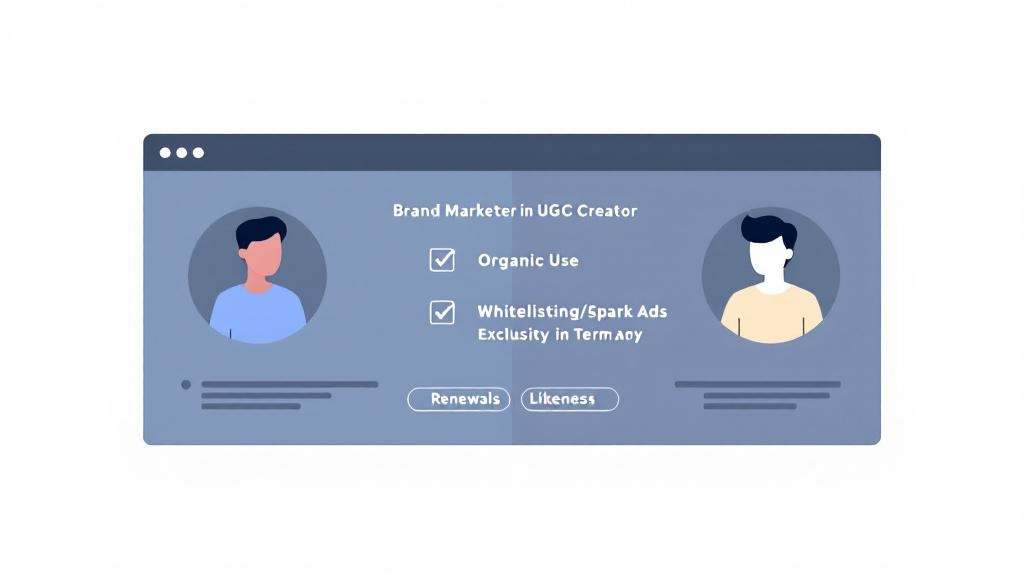
Most UGC disputes don’t start with creative quality—they start with usage-rights that were never clearly defined. In day-to-day influencer-marketing, brands often default to “We can post it anywhere,” while creators assume “You can post it once on your feed.” That mismatch becomes expensive when a winning asset is moved from organic to paid-social, repurposed into new formats, or used across regions.
The most common gaps are predictable: organic vs. paid (boosting vs. running from an ad account), whitelisting/Spark Ads (advertising through the creator handle), exclusivity (can the creator work with competitors), renewals (what happens after 30/60/90 days), and creator likeness (name/voice/face in ads). These aren’t “legal extras”—they’re core deal terms for ugc-licensing and basic brand-legal hygiene. If your brief and contract don’t match your media plan, approvals and payments slip, and everyone inherits avoidable risk.
2) Clause language patterns (and red flags) for paid social, whitelisting, exclusivity, and likeness
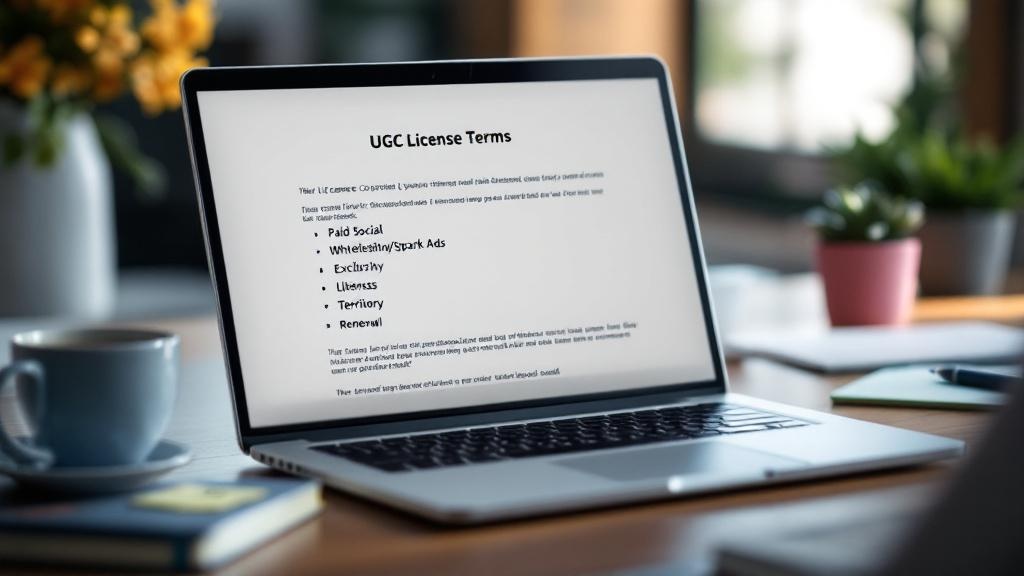
Use plain-English clauses that map to how ads actually run. Patterns that reduce ambiguity: Scope (“Brand may use the Content for organic social posts on Brand-owned channels”), Paid usage (“Brand may use the Content in paid advertisements on TikTok/Meta/YouTube”), and Whitelisting (“Creator grants authorization for Brand to run ads via Creator’s handle using Spark Ads/Branded Content tools for the Term”). For creator likeness, specify: “Creator grants a license to use Creator’s name, image, voice, and biographical materials solely in connection with the Content and campaign placements described herein.”
Red flags in ugc-licensing: (1) “in perpetuity” without a buyout price, (2) “all media now known or later devised” without platform limits, (3) no definition of “paid” (boosted posts vs. dark ads), (4) exclusivity without category boundaries (“beauty” is too broad), and (5) renewals that auto-extend silently. If you’re scaling paid-social, insist on platform lists, term/territory, and a renewal rate card. That’s not bureaucracy—it’s brand-legal protection with predictable performance ops.
3) A simple decision tree for term + territory (and how to operationalize it)
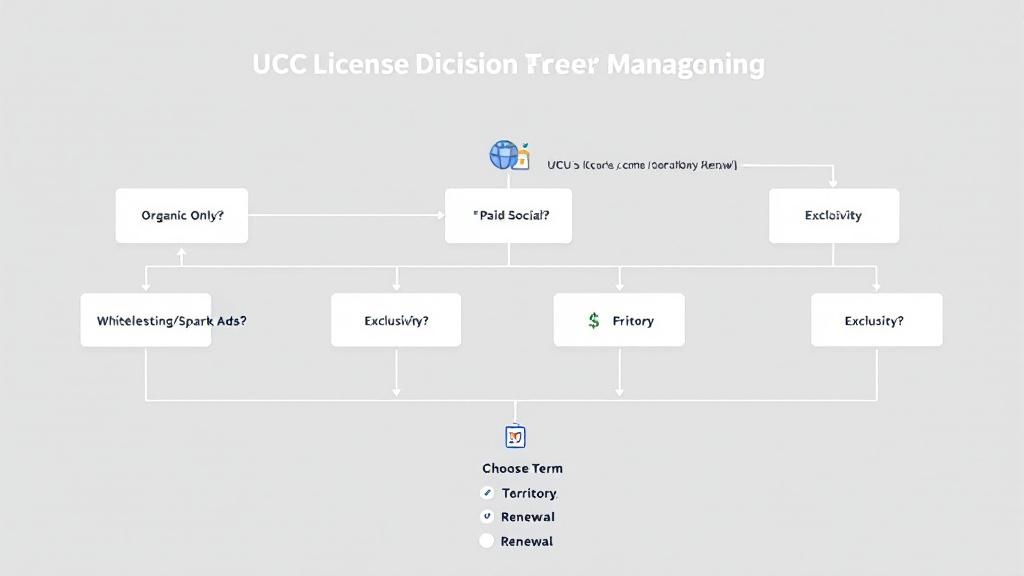
When choosing a license, start from your media plan and work backward. Decision tree: 1) Is this only for brand-owned organic? If yes, set a short term (e.g., 12 months) and broad territory only if you truly operate globally. 2) Will you run it as paid-social? If yes, pick a defined term (30/60/90 days is common), list platforms, and clarify whether editing/cropping is allowed. 3) Do you need whitelisting/Spark Ads? If yes, include handle-based authorization, an access process, and a termination clause if the creator disables permissions. 4) Any exclusivity? If yes, limit it to a narrow competitor set and tie it to the paid term.
Then price renewals like media: “Renewal available at X% of the original fee per additional 30 days,” with territory add-ons (US → North America → global). Marketplaces like BriefRights help by standardizing briefs, approvals, and click-through license docs so usage-rights stay consistent from sourcing to escrow payout. That’s how influencer-marketing becomes predictable, compliant, and scalable.